




menu

Rooftop Unit Installation in Memphis – Minimize Downtime with Industrial-Grade Commercial RTU Deployment

When your rooftop HVAC system fails, every hour of downtime costs you revenue. Our commercial RTU installation teams deploy rapidly across Memphis to restore climate control with precision-engineered rooftop package units built for Tennessee's extreme weather.

Slider Image 1
Slider Image 2
Slider Image 3
Slider Image 4
Slider Image 5
Slider Image 7
Slider Image 8
Slider Image 9
Slider Image 10
Slider Image 11

Why Memphis Commercial Buildings Demand Purpose-Built RTU Systems

Memphis sits at the intersection of brutal humidity and temperature extremes. Summer heat indexes regularly exceed 105 degrees, while winter freeze-thaw cycles stress mechanical systems mounted on exposed rooftops. Your commercial rooftop HVAC installation faces challenges most regions never see.

The Memphis climate accelerates compressor wear. High humidity loads force RTU condensers to run longer cycles, increasing energy draw and shortening component lifespan. Many warehouse and distribution facilities in Southeast Memphis experience premature system failures because their rooftop package unit installation was spec'd for moderate climates, not Mid-South conditions.

Add the seismic zone classification for Shelby County, and your commercial RTU install must account for structural load calculations most contractors ignore. A 15-ton rooftop unit weighs 2,200 pounds. When mounted on aging flat roofs common in Midtown or the Medical District, improper curb installation creates leak points and structural stress.

Your business cannot afford a rushed commercial rooftop HVAC installation that fails during peak season. Distribution centers along Lamar Avenue and industrial facilities near the airport require systems engineered for 24/7 operation in Memphis-specific conditions. Generic RTU installation approaches leave you vulnerable to callback failures, refrigerant leaks from vibration stress, and ductwork disconnections during high wind events.

The difference between a functional rooftop AC replacement and a liability starts with understanding local building loads, prevailing wind patterns off the Mississippi River, and how Memphis's clay soil settlement affects roof deck integrity over time.

Why Memphis Commercial Buildings Demand Purpose-Built RTU Systems
How Professional RTU Installation Protects Your Business Continuity

How Professional RTU Installation Protects Your Business Continuity

A commercial RTU install begins with structural verification, not equipment placement. We perform roof deck load analysis using Memphis building department standards before any rooftop package unit installation proceeds. Your existing curb gets inspected for weather damage, proper pitch, and flashing integrity. Most callback failures trace to water infiltration at the curb-to-roof interface, an issue we eliminate with commercial-grade EPDM flashing and continuous bead sealant.

Refrigerant line sets get hard-piped with brazed connections, never compression fittings. Memphis temperature swings cause expansion and contraction that loosens mechanical connections. We use nitrogen purge during brazing to prevent oxidation inside copper lines, a detail that extends compressor life by preventing scale buildup in the refrigeration circuit.

Electrical connections follow NEC Article 440 for motor-compressor circuits. We install fusible disconnects within sight of the RTU, dedicated circuit breakers sized for locked rotor amperage, and verify voltage balance across all three phases for commercial power. Your rooftop unit runs on 208V or 460V three-phase power, and voltage imbalance beyond 2 percent destroys compressor windings.

Ductwork transitions receive custom fabrication. We do not force standard elbows onto non-standard plenums. Sheet metal gets TIG welded at seams, insulated with R-6 duct wrap, and sealed with mastic, not tape. Static pressure readings get documented across supply and return to verify CFM delivery matches your building load calculation.

Condensate drains route to code-compliant termination points with P-traps sized for negative plenum pressure. We install secondary overflow pans with dedicated drain lines and float switches that shut down the unit before water damages your ceiling grid.

What Happens During Your Commercial RTU Deployment

Rooftop Unit Installation in Memphis – Minimize Downtime with Industrial-Grade Commercial RTU Deployment
01

Structural Assessment and Planning

Our team conducts a roof integrity survey and reviews your building's mechanical drawings. We verify load-bearing capacity, measure existing curb dimensions, and document electrical service capacity. You receive a detailed scope of work document outlining equipment specifications, crane access requirements, and projected timeline. For multi-story facilities, we coordinate with building management to schedule rooftop access and minimize tenant disruption during the commercial rooftop HVAC installation.
02

Unit Deployment and Integration

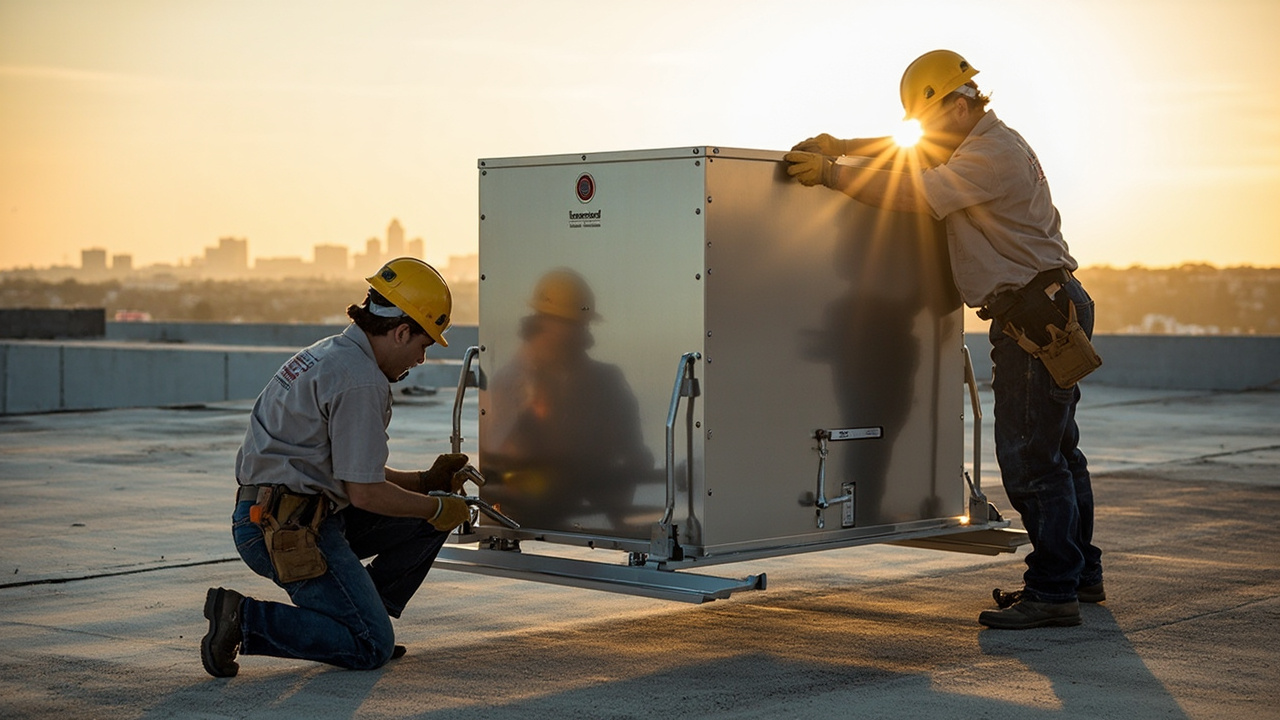
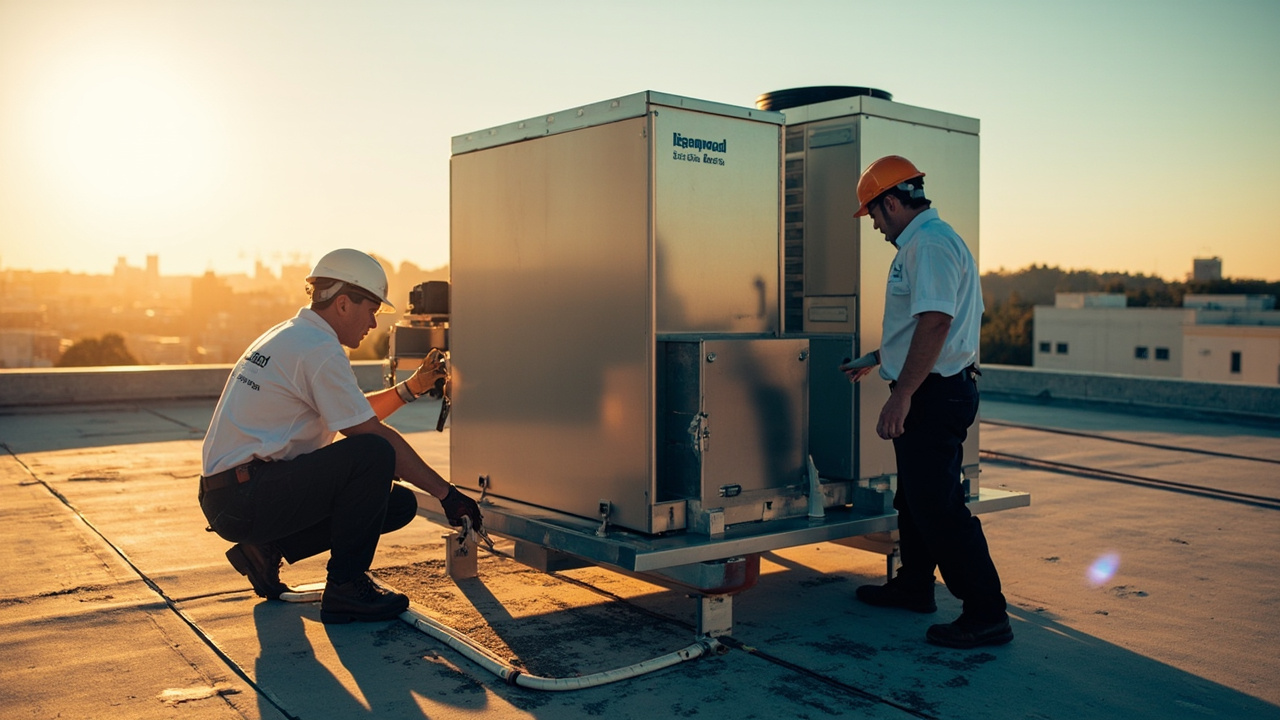
Crane operations typically occur during off-hours to avoid traffic disruption on Memphis streets. The existing RTU gets rigged, removed, and the roof opening gets sealed temporarily. New curb installation includes structural reinforcement if deck conditions require upgrades. The rooftop package unit gets positioned, leveled within 1/8 inch tolerance, and bolted to the curb frame. Refrigerant lines, electrical feeds, and ductwork get connected following manufacturer torque specifications and local code requirements for commercial installations.
03

Commissioning and Performance Verification

We perform a complete startup sequence including refrigerant charge verification, airflow measurement at each zone, and control sequence testing. Your thermostat gets programmed for optimal efficiency cycles. Economizer dampers get calibrated for Memphis's climate zone. You receive documentation showing superheat and subcooling readings, amperage draw on each phase, and static pressure measurements. We train your facility manager on basic troubleshooting and preventive maintenance schedules specific to your RTU model.

Why Memphis Facility Managers Choose Local RTU Specialists

Commercial rooftop HVAC installation in Memphis requires familiarity with Shelby County permit requirements and Tennessee mechanical codes. Our technicians hold EPA Universal certification and Tennessee mechanical contractor licenses. We maintain relationships with local building inspectors, which accelerates permit approval and final inspection scheduling.

Memphis's commercial building stock presents unique challenges. Older warehouse structures along Southern Avenue have wood deck roofs that require load spreading plates under RTU mounting points. Medical office buildings near Baptist Memorial demand hospital-grade filtration and backup power integration. Distribution centers in Southeast Memphis need redundant cooling to protect inventory during equipment failures.

We stock replacement parts for major RTU manufacturers at our Memphis location. When a compressor fails on your Carrier, Trane, or Lennox rooftop unit, we do not wait three days for shipping. Our response time matters because your business cannot operate without climate control.

Crane access in Memphis requires street permits and coordination with Memphis Police Department for lane closures on major thoroughfares. We handle permitting, traffic control, and liability documentation. Your role ends at approving the proposal.

Local experience means understanding how Mississippi River humidity affects condenser coil performance. We spec coils with hydrophilic coatings and larger face areas to handle moisture loads that coastal units never encounter. Memphis sits in a unique climate zone where summer dew points regularly hit 75 degrees, creating condensation rates that overwhelm undersized drain systems.

Your commercial RTU install gets engineered for Memphis conditions, not generic specifications copied from a national template. That distinction determines whether your system runs fifteen years or fails in five.

What Your Commercial RTU Installation Includes

Project Timeline and Scheduling

Most commercial rooftop HVAC installations complete within 48 to 72 hours from crane arrival to final startup. Complex projects involving multiple units or structural modifications may extend to five business days. We schedule crane operations during your lowest occupancy periods to minimize business disruption. You receive a detailed timeline showing permit submission, equipment delivery, crane scheduling, and commissioning dates. Emergency rooftop AC replacement projects get prioritized with expedited permits and weekend crane availability. Our project managers provide daily progress updates and immediately flag any delays caused by weather, shipping, or unforeseen structural issues.

Pre-Installation Engineering Assessment

Our initial site survey includes thermal imaging of your existing RTU to identify component failures, roof deck inspection using moisture meters to detect hidden leaks, and electrical service verification with power quality analysis. You receive a written report documenting current system deficiencies, projected energy savings with new equipment, and any roof repairs required before installation proceeds. We review your building's load calculation to confirm proper RTU tonnage. Many facilities operate with oversized or undersized units because the original contractor never performed Manual N calculations. Our assessment prevents repeating that expensive mistake during your rooftop package unit installation.

System Performance and Efficiency

Your new RTU delivers factory-rated capacity because we verify refrigerant charge by superheat method, not guesswork. Airflow gets balanced to within 10 percent of design CFM using calibrated manometers and pitot tube arrays. Economizer controls get programmed for Memphis climate data to maximize free cooling during shoulder seasons. You receive commissioning documentation showing actual versus design performance across all operating parameters. Most commercial RTU installations achieve 15 to 25 percent energy reduction compared to older units, with payback periods under four years when factoring reduced maintenance costs and improved humidity control that protects interior finishes and inventory.

Maintenance Programs and Support

We offer scheduled maintenance agreements that include quarterly filter changes, annual coil cleaning, refrigerant level verification, and electrical connection inspection. Your agreement guarantees priority response during system failures and discounted rates on repair parts. Preventive maintenance extends RTU lifespan and preserves manufacturer warranties that require documented service. Our technicians monitor compressor amperage trends to predict failures before they occur, allowing you to budget for replacements instead of facing emergency breakdowns during peak cooling season. You receive detailed service reports after each maintenance visit documenting system performance and any recommended repairs to prevent future downtime.

Frequently Asked Questions

You Have Questions,
We Have Answers

How much does it cost to install a rooftop unit? +

Commercial rooftop unit installation costs vary based on tonnage, building access, electrical upgrades, and curb modifications. A 3-ton unit for small retail runs differently than a 20-ton system for industrial facilities. Memphis-specific factors include structural reinforcement for high summer heat loads and humidity control equipment. Expect crane rental fees if roof access is limited. Ductwork modifications, control integration, and gas line work add to base equipment pricing. Your existing infrastructure condition matters. Request itemized quotes covering equipment, labor, permits, and startup. Budget for proper commissioning to validate performance and avoid callbacks that disrupt operations.

What is the $5000 rule for AC? +

The $5000 rule compares repair costs against replacement value. If repairs exceed 50% of new equipment cost, replacement makes financial sense for most commercial properties. For aging rooftop units in Memphis, factor in rising refrigerant costs and energy efficiency gaps. A $4500 repair on an 18-year-old unit with declining efficiency often means more failures ahead. Calculate total cost of ownership, not just immediate repair bills. Consider building occupancy schedules and liability if the unit fails during peak business hours. This rule helps finance teams justify capital expenditure versus maintenance budgets.

What is the 2 foot rule for HVAC? +

The 2 foot rule requires HVAC clearance around equipment for service access and airflow. Rooftop units need unobstructed space on all sides for technicians to work safely and for proper air intake. Memphis code enforcement checks this during inspections. Blocked condensers run hotter, reducing capacity and shortening compressor life. Exhaust fans, ductwork, and mechanical equipment must maintain clearance. Commercial properties with tight roof space need to plan equipment placement during installation. Violating clearance rules voids warranties and creates liability if service techs get injured. Budget for proper equipment spacing during rooftop layouts.

What are the disadvantages of RTU? +

Rooftop units face direct weather exposure, meaning faster deterioration from Memphis humidity, UV damage, and storm debris. Roof leaks from curb flashing failures cause expensive interior damage. Cranes or lifts add installation costs compared to ground equipment. Roof access complicates emergency repairs during business hours. RTUs concentrate mechanical systems in one exposed location, creating single points of failure. Noise transmits directly into occupied spaces below without proper vibration isolation. Structural loading requires engineering verification on older buildings. Regular maintenance is harder since techs must access roofs safely. These trade-offs balance against space savings inside your building.

How much is an AC unit for a 2000 sq ft house? +

This question targets residential systems, but commercial rooftop units serve different applications. A 2000 square foot commercial space requires load calculations based on occupancy, equipment heat loads, and ventilation requirements, not just square footage. Memphis cooling loads differ significantly between retail, office, and warehouse uses. Commercial RTUs typically start at 3 tons for small spaces but may need 5 to 10 tons depending on your business type. Insulation quality, window area, and operating hours affect sizing. Work with commercial contractors who perform Manual N load calculations for accurate equipment selection and avoid undersized systems.

What is the 3 minute rule for AC? +

The 3 minute rule prevents compressor damage by enforcing minimum off-cycle times between restarts. Commercial rooftop units use this delay to equalize refrigerant pressure before the compressor restarts. Without this protection, short cycling damages scroll compressors and increases power consumption. Memphis summer heat creates frequent cycling if your system is oversized or controls malfunction. Properly programmed thermostats and control boards enforce this rule automatically. If your RTU rapid cycles, check refrigerant charge, airflow restrictions, and control settings before replacing components. This delay protects your equipment investment and prevents premature compressor failures that shut down business operations.

Why Memphis's Humidity and Seismic Zone Requirements Make RTU Selection Critical

Memphis averages 220 days per year with relative humidity above 60 percent, creating latent cooling loads that standard RTU systems struggle to manage. Your rooftop package unit must remove moisture, not just lower temperature. Units spec'd without enhanced dehumidification modes leave your facility clammy and promote mold growth in ductwork. Additionally, Memphis sits in seismic zone 4 due to the New Madrid fault system. Commercial rooftop HVAC installation requires seismic restraints, flexible gas connections, and vibration isolation that meets International Building Code provisions for high-risk zones. Contractors unfamiliar with these requirements create life safety violations that surface during insurance inspections or property sales.

Local building officials in Memphis expect mechanical contractors to understand Title 11 of the municipal code governing rooftop equipment screens and noise ordinances. Your RTU installation may require acoustic barriers if your building sits near residential zones in Cooper-Young or Overton Square. We maintain working relationships with Shelby County plan reviewers and understand which inspectors require additional documentation for rooftop penetrations. Choosing a contractor with Memphis-specific permitting experience prevents project delays and ensures your commercial RTU install passes inspection on the first attempt. Our familiarity with local supply houses also means faster parts availability when your facility needs emergency repairs.
HVAC Services in The Memphis Area

Ironwood HVAC Memphis proudly serves the entire Memphis community and the surrounding counties. Our team is local, dedicated, and always ready to dispatch quickly to your residential or commercial location. View our central service area on the map below, or contact us directly to confirm if your specific neighborhood falls within our swift response zone. We look forward to bringing you reliable comfort.

Address:
Ironwood HVAC Memphis, 1661 International Dr, Memphis, TN, 38120

Additional Services We Offer

Our news updates

Latest Articles & News from The Blogs

Your home gym in Lakeland should feel energizing, not like a sauna. Yet many Memphis homeowners find their workout spaces…

Why your home gym in Lakeland feels stuffy and how to fix the ventilation

Your home gym in Lakeland should feel energizing, not like a sauna. Yet many Memphis homeowners find their workout spaces…

Choosing an air purifier that actually removes BBQ smoke in your Midtown backyard

Choosing an air purifier that actually removes BBQ smoke in your Midtown backyard Memphis summers bring backyard BBQs but the…

How to stop mice and squirrels from nesting in your outdoor unit in Eads

How to stop mice and squirrels from nesting in your outdoor unit in Eads Pests like mice and squirrels are…

Contact Us

Memphis summers destroy aging rooftop units. Do not wait for catastrophic failure during your busiest months. Call (901) 640-3999 now for a structural assessment and project proposal. Our installation teams deploy across Memphis within 24 hours of approval.