




menu

Outdoor Unit Not Spinning in Memphis – Get Expert Diagnosis and Fast, Permanent Repair

When your outdoor AC fan stops working in Memphis heat, you need technicians who can pinpoint the exact cause and restore cooling quickly, whether it's a failed capacitor, locked compressor, or burned motor.

Slider Image 1
Slider Image 2
Slider Image 3
Slider Image 4
Slider Image 5
Slider Image 7
Slider Image 8
Slider Image 9
Slider Image 10
Slider Image 11

Why Your AC Condenser Fan Stopped Working

You walk outside and notice the outdoor unit is silent. The compressor might be humming, but the condenser fan is not spinning. In Memphis, where summer temperatures push past 95 degrees and humidity hovers near 70 percent, a dead outdoor fan means your system cannot reject heat. The refrigerant stays hot. Your compressor overheats. Indoor temperatures climb.

This problem escalates fast in the Bluff City. The outdoor unit fan is responsible for pulling air through the condenser coils to cool the refrigerant. When the outside AC fan is not turning, the system cannot complete the cooling cycle. Your air conditioner outdoor fan not running is not a minor inconvenience. It's a system failure waiting to destroy your compressor.

Common causes include a failed start capacitor, a seized fan motor, a tripped safety switch, or a burnt control board. Memphis summer heat accelerates capacitor degradation. Pollen from surrounding hardwoods clogs motors. Storm debris damages fan blades. The clay soil around Midtown and East Memphis shifts foundations, which can misalign condensers and stress electrical connections.

You might hear a clicking sound when the system tries to start. You might see the compressor running but no airflow. You might smell burning plastic. These are not problems you troubleshoot with a YouTube video. A condenser fan not working requires voltage testing, motor resistance checks, and capacitor measurement. Ironwood HVAC Memphis has the diagnostic tools to identify the exact failure point and restore function before your compressor suffers permanent damage.

Why Your AC Condenser Fan Stopped Working
How We Fix a Dead Outdoor Unit Fan

How We Fix a Dead Outdoor Unit Fan

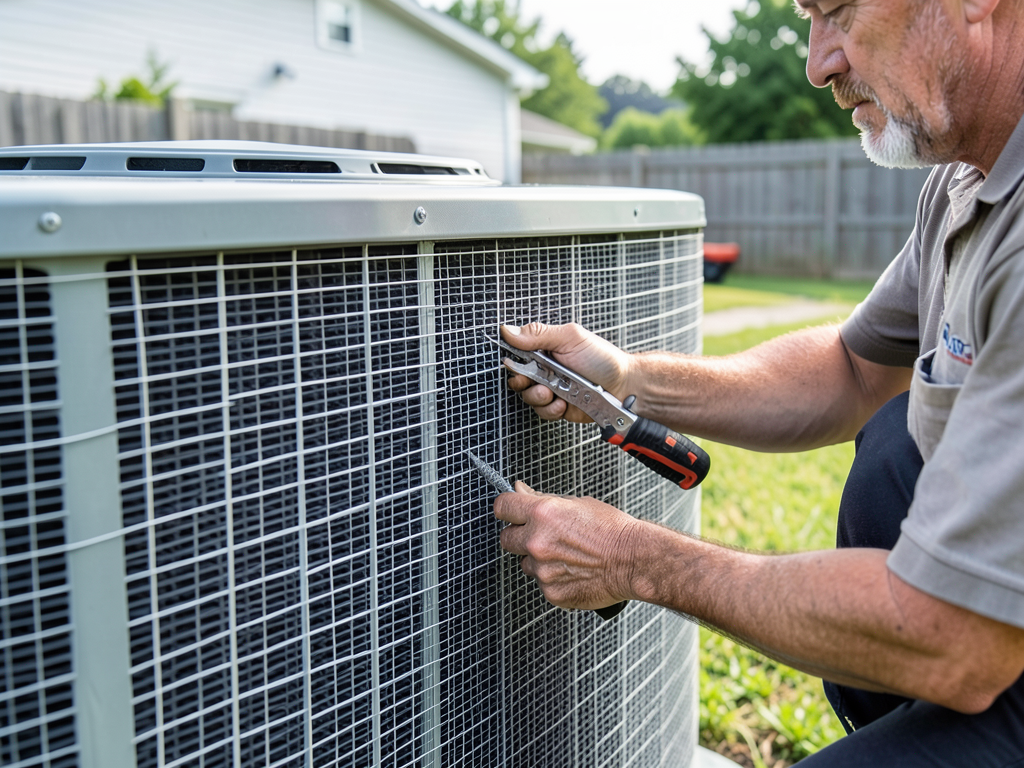
We start with electrical diagnostics. A multimeter test on the run capacitor reveals if the microfarad rating has dropped below spec. Capacitors fail gradually in Memphis heat, losing the voltage boost needed to start the motor. We check for 370V or 440V rating depending on your system. A weak capacitor causes the motor to hum but not spin.

Next, we inspect the contactor. This relay switch sends power to the fan motor and compressor. Pitted contacts from electrical arcing can prevent current flow. We measure continuity across the contacts and replace the contactor if it shows resistance or visible scoring.

We manually spin the fan blade to check for bearing seizure. A locked motor requires replacement. We also inspect the blade itself for cracks, warping, or imbalance. Storm debris in Cooper-Young or high winds near the Mississippi River can bend blades, creating drag that prevents rotation.

If the motor is functional but the AC condenser fan is not working, we trace the wiring to the control board. A burnt relay or failed transformer on the board can cut power to the fan circuit. We test voltage at each connection point to isolate the fault.

Once we identify the failure, we replace the component with an exact match for your system. We use OEM-grade capacitors rated for high ambient temperatures. We install motors with sealed bearings to resist Memphis humidity. We verify proper voltage supply, check amperage draw under load, and confirm airflow velocity through the coils. A condenser fan not spinning is a symptom. We fix the root cause.

What Happens When We Diagnose Your Stopped Outdoor Fan

Outdoor Unit Not Spinning in Memphis – Get Expert Diagnosis and Fast, Permanent Repair
01

System Power Analysis

We begin by testing voltage at the disconnect box and contactor. This confirms whether the fan motor is receiving power. We measure capacitance on the start and run capacitors to determine if they're within tolerance. Failed capacitors are the most common cause of a condenser fan not spinning in Memphis systems over five years old.
02

Motor and Blade Inspection

We manually rotate the fan blade to check for bearing resistance or obstruction. We inspect the blade for damage, cracks, or imbalance. We test motor windings for continuity and shorts. A seized motor produces heat and draws excessive amperage. We verify the motor shaft spins freely before moving to electrical components.
03

Component Replacement and Testing

We install the replacement part, whether it's a capacitor, contactor, or motor. We verify correct voltage at the motor terminals under load. We measure amperage draw to confirm it matches the motor nameplate rating. We observe the fan through a full cooling cycle to ensure consistent operation and proper airflow across the condenser coils.

Why Memphis Homeowners Call Ironwood HVAC for Condenser Fan Repairs

Memphis heat does not wait for business hours. When your outdoor unit fan stops, your compressor is at risk. We respond quickly because we understand how fast a small electrical failure becomes a major system replacement in this climate.

We stock the capacitors, motors, and contactors that fail most often in Memphis systems. We do not order parts and make you wait three days in 95-degree heat. We carry dual-run capacitors rated for high ambient temperatures, condenser fan motors with sealed bearings for humidity resistance, and heavy-duty contactors built for frequent cycling.

Our technicians have diagnosed hundreds of outdoor unit fan failures across Midtown, East Memphis, Germantown, and Cordova. We know the systems installed in Historic Cooper-Young bungalows. We service the commercial units on Poplar Avenue and the split systems in Collierville subdivisions. We understand how Memphis pollen clogs motors, how storm debris damages blades, and how voltage sags during peak demand stress capacitors.

We do not guess. We test. We measure voltage, capacitance, resistance, and amperage. We isolate the failure to the exact component. We explain what failed, why it failed, and how we prevent it from happening again.

You need a team that understands the relationship between a failed capacitor and compressor burnout. You need someone who knows that a condenser fan not working in Memphis summer heat is a countdown to catastrophic failure. Ironwood HVAC Memphis provides the diagnostic precision and component availability to restore your system before the damage spreads.

What You Get When We Fix Your Outdoor Fan

Same-Day Response for Dead Fans

We dispatch to Memphis homes within hours of your call. A stopped condenser fan is an emergency in this climate. We prioritize these calls because we know the compressor is running hot and the refrigerant cannot reject heat. Our service vans carry the most common failure parts, so we complete most repairs in a single visit. You get cooling restored before your indoor temperature becomes unbearable.

Full Electrical and Mechanical Diagnosis

We do not replace parts until we confirm the root cause. We test capacitors with a multimeter, measure voltage at the contactor, check motor windings for continuity, and inspect the fan blade for damage. We verify the control board is sending power to the motor circuit. You get a complete diagnosis, not a guess. We explain what failed and show you the test results before we recommend a repair.

OEM-Grade Component Replacement

We install capacitors, motors, and contactors that match or exceed your original equipment specifications. We use dual-run capacitors rated for high ambient temperatures because Memphis summer heat degrades cheap parts in months. We install motors with sealed bearings to resist humidity. We verify proper voltage, amperage draw, and airflow before we leave. Your outdoor fan runs quietly, efficiently, and reliably.

System Monitoring and Preventive Guidance

After we restore function, we explain how to monitor your system for early warning signs. We show you what to listen for, what to look for, and when to call. We recommend maintenance intervals based on your system age and usage patterns. Regular capacitor testing and motor lubrication extend component life and prevent future failures. We help you avoid the next breakdown before it happens.

Frequently Asked Questions

You Have Questions,
We Have Answers

Why is my outside AC unit not spinning? +

Your outside AC unit may not spin due to a failed capacitor, seized motor bearings, tripped breaker, or blown contactor. Memphis heat stresses these components. The capacitor stores energy to start the fan motor. When it fails, the motor cannot engage. Debris buildup from cottonwood seeds and Mid-South pollen can also jam the blades. A tripped breaker cuts power entirely. If the unit hums but does not spin, the capacitor is likely dead. Electrical failure requires immediate attention to prevent compressor damage, which runs hotter without airflow.

What is the problem if the fan is not spinning? +

A fan that does not spin indicates power loss, mechanical failure, or control board issues. Check your breaker first. If power reaches the unit but the fan stays still, the motor capacitor may be discharged. Capacitors degrade faster in Memphis humidity and summer heat. A locked rotor from dirt or rust prevents blade rotation. The contactor, which sends voltage to the motor, may be welded or corroded. Without fan operation, your compressor overheats and shuts down on safety limits. This causes short cycling and higher electric bills.

Why is my AC unit humming but not spinning? +

Humming without spinning signals a failed start capacitor or seized motor. The hum is the compressor trying to run while the fan motor struggles. The capacitor gives the motor its initial push. When it weakens, the motor draws current but cannot turn. Memphis summer voltage sags worsen this condition. A stuck fan blade from debris or a failed bearing also causes humming. Turn off the system immediately. Running without fan airflow overheats the compressor and risks permanent damage. This repair requires a technician to test capacitance and motor resistance.

How to fix AC unit outside fan not working? +

Turn off power at the breaker and thermostat. Inspect the fan blade for obstructions like leaves or sticks. Check the breaker for a trip. Reset it once. If the fan still does not work, the capacitor or motor likely failed. Do not attempt capacitor replacement yourself. Capacitors store lethal voltage even when power is off. Memphis humidity accelerates component failure, so annual maintenance catches these issues early. A qualified technician will test voltage, measure capacitance with a multimeter, and replace the failed part safely.

Should I turn off my AC if the fan isn't spinning? +

Yes, turn off your AC immediately if the fan stops spinning. Running the system without fan airflow traps heat around the compressor. The compressor relies on the fan to expel heat. Without cooling, internal temperatures spike and trigger safety shutoffs. Repeated overheating shortens compressor life and risks a complete failure, which costs thousands to replace. In Memphis heat, a non-spinning fan accelerates damage within hours. Shut the system down at the thermostat and breaker. Call a technician before restarting to avoid costly secondary damage.

What is the $5000 rule for AC? +

The $5000 rule helps you decide between repair and replacement. Add the cost of the repair to your system age in years. If the total exceeds $5000, replacement is smarter. For example, a $1200 repair on a 15-year-old unit totals $6200. That signals replacement. A $500 repair on a 5-year-old system totals $5500, which is borderline. This rule accounts for future repair likelihood. Older systems in Memphis face constant strain from heat and humidity. Frequent repairs add up. Replacement offers efficiency gains and warranty protection.

How do I know if my fan motor is blown? +

A blown fan motor shows specific symptoms. The motor does not respond when power is applied. You may hear humming or grinding. A burning smell from the unit indicates overheated windings. Use a multimeter to check resistance between motor terminals. Infinite resistance means open windings. Zero resistance indicates a short. A seized shaft that does not turn by hand signals bearing failure. Memphis heat and humidity corrode bearings faster. If the motor is hot to touch when off, internal damage occurred. Replacement is the only fix for a blown motor.

How to get a fan to spin again? +

If the fan blade spins freely by hand but does not start automatically, replace the capacitor. Capacitors lose charge over time. Memphis heat accelerates this breakdown. A weak capacitor cannot generate enough torque to start rotation. If the blade is stuck, remove debris and check the motor shaft. Rust or dried lubricant can seize bearings. Do not force the blade. A locked rotor damages the motor further. Turn off power before touching any components. A technician will test the capacitor, check motor windings, and replace failed parts.

Can you spray WD-40 in a fan motor? +

No, never spray WD-40 in a fan motor. WD-40 is a solvent, not a lubricant. It dissolves existing grease and attracts dust, which damages bearings. Most modern fan motors are sealed and do not require external lubrication. Older motors have oil ports for specific motor oil. Using the wrong product voids warranties and accelerates wear. Memphis humidity already stresses motor components. Adding WD-40 worsens corrosion. If the motor squeals or struggles, the bearings are failing. Replace the motor rather than attempt a temporary fix that causes further damage.

What is the 3 minute rule for AC? +

The 3-minute rule prevents compressor damage during restarts. After your AC shuts off, wait three full minutes before restarting. This allows refrigerant pressure to equalize between the high and low sides. Starting with unequal pressure forces the compressor to work against resistance, which strains the motor and capacitor. Memphis heat causes frequent cycling, which increases restart stress. Most thermostats enforce this delay automatically. If you manually cycle power or reset a breaker, wait three minutes. Ignoring this rule shortens compressor life and risks hard-start failures.

How Memphis Heat and Humidity Accelerate Condenser Fan Failures

Memphis summers combine high temperatures with crushing humidity. When outdoor temperatures hit 95 degrees and relative humidity reaches 70 percent, your condenser fan motor works harder to move air through the coils. Capacitors degrade faster under sustained heat. Motor bearings wear faster in humid air. Electrical contacts on the contactor pit and corrode. The clay soil across Shelby County shifts foundations, which can stress electrical connections and cause intermittent power loss to the fan circuit. These environmental factors make condenser fan failures more common here than in drier climates.

Ironwood HVAC Memphis has repaired outdoor unit fans across every neighborhood in the city. We know the older systems in Cooper-Young need frequent capacitor replacement. We service the high-efficiency units in Germantown that require precise voltage supply. We understand how storm debris from Mississippi River winds damages fan blades and how pollen from hardwood trees clogs motors. Local expertise matters when diagnosing a condenser fan not spinning because we anticipate the failures common to Memphis systems and stock the parts you need.
HVAC Services in The Memphis Area

Ironwood HVAC Memphis proudly serves the entire Memphis community and the surrounding counties. Our team is local, dedicated, and always ready to dispatch quickly to your residential or commercial location. View our central service area on the map below, or contact us directly to confirm if your specific neighborhood falls within our swift response zone. We look forward to bringing you reliable comfort.

Address:
Ironwood HVAC Memphis, 1661 International Dr, Memphis, TN, 38120

Additional Services We Offer

Our news updates

Latest Articles & News from The Blogs

Your home gym in Lakeland should feel energizing, not like a sauna. Yet many Memphis homeowners find their workout spaces…

Why your home gym in Lakeland feels stuffy and how to fix the ventilation

Your home gym in Lakeland should feel energizing, not like a sauna. Yet many Memphis homeowners find their workout spaces…

Choosing an air purifier that actually removes BBQ smoke in your Midtown backyard

Choosing an air purifier that actually removes BBQ smoke in your Midtown backyard Memphis summers bring backyard BBQs but the…

How to stop mice and squirrels from nesting in your outdoor unit in Eads

How to stop mice and squirrels from nesting in your outdoor unit in Eads Pests like mice and squirrels are…

Contact Us

A stopped condenser fan puts your compressor at risk. Every minute it runs without airflow increases the chance of permanent damage. Call Ironwood HVAC Memphis at (901) 640-3999 for same-day diagnosis and repair. We fix it right the first time.