How to stop mice and squirrels from nesting in your outdoor unit in Eads
Pests like mice and squirrels are attracted to the warmth and shelter of your outdoor HVAC unit, especially in rural areas like Eads. These critters can cause significant damage by chewing wires, building nests in critical components, and creating blockages that reduce efficiency. This guide covers proven methods to keep your system safe, tailored to the local environment and climate.
Why Eads Homes Are Vulnerable to HVAC Pest Infestations
Eads sits in a wooded, rural area of Shelby County where natural habitats overlap with residential neighborhoods. The combination of mature trees, nearby fields, and older homes with gaps in exterior walls creates ideal conditions for rodents to find their way to your outdoor unit. During colder months, these animals seek the residual heat from running equipment, while in summer they look for dark, enclosed spaces to escape the Tennessee heat.
Local wildlife patterns show increased rodent activity near properties adjacent to Meeman-Shelby Forest State Park and along the Wolf River corridor. The dense vegetation common in Eads neighborhoods provides both food sources and travel paths directly to your HVAC equipment.
Common Entry Points and Damage Patterns
Rodents typically access outdoor units through several vulnerable points. The line set penetration where refrigerant lines enter your home often has gaps large enough for mice to squeeze through. Squirrels can jump from nearby trees or fences directly onto the unit top. Small gaps in the condenser cabinet or damaged fins provide additional entry points.
Once inside, pests cause multiple problems. Chewed electrical wires create short circuits that can trip breakers or damage control boards. Nesting materials block airflow through the condenser coil, reducing cooling efficiency and potentially causing compressor overheating. Urine and droppings corrode metal components and create sanitation issues. Troubleshooting AC Issues.
Step-by-Step Prevention Strategies
Effective pest prevention requires a systematic approach addressing both the immediate unit and surrounding areas. Start by creating a three-foot clearance zone around the entire outdoor unit. Remove all vegetation, including grass, weeds, and overhanging branches that provide cover or access paths.
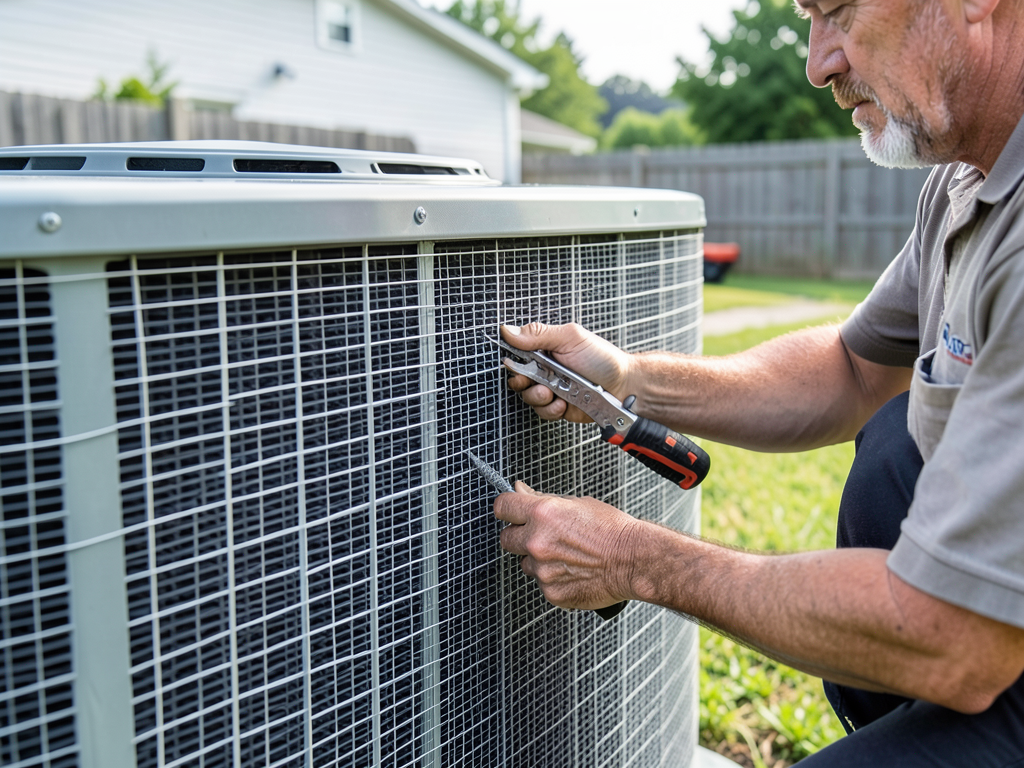
Install hardware cloth with 1/4-inch mesh openings around the base of the unit. This size blocks rodents while allowing proper airflow. Secure the mesh with rust-resistant screws, extending it six inches below ground level to prevent burrowing. For line sets, use expandable foam sealant rated for exterior use, then cover with UV-resistant plastic line set covers.
Consider installing a commercial-grade condenser cage or hail guard system. These metal enclosures provide physical barriers while maintaining ventilation. Look for models with hinged access panels for maintenance.
Memphis-Specific Pest Control Considerations
The Mid-South climate creates unique challenges for pest prevention. High humidity levels in Shelby County accelerate corrosion of metal barriers and promote mold growth in nesting materials. Summer temperatures exceeding 95°F increase the urgency of keeping condenser coils clear for proper heat dissipation.
Local building codes in unincorporated Shelby County require specific clearance distances for HVAC equipment near property lines. The Shelby County Building Code mandates at least 36 inches of clearance from any structure or fence. This regulation helps prevent both pest access and code violations.
During fall months, rodent populations increase as animals prepare for winter. This seasonal pattern means fall is the optimal time for comprehensive pest-proofing before animals establish winter nests. EPA pest control guidelines.
Common Mistakes That Attract Pests
Many homeowners inadvertently create pest-friendly environments. Storing pet food or birdseed near the outdoor unit provides food sources that attract rodents. Leaving fallen fruit from nearby trees creates additional attractants. Poor drainage around the unit creates damp conditions that both pests and their prey find appealing.
Using the wrong materials can actually worsen the problem. Standard chicken wire has openings large enough for juvenile mice to pass through. Expanding foam alone degrades quickly under UV exposure and temperature cycling. Some homeowners block all airflow with solid barriers, causing system overheating and premature failure.
Professional Inspection and Maintenance
Annual professional HVAC maintenance includes pest inspection as a standard service. Technicians check for signs of nesting, chewed wires, and entry points during routine service calls. They also clean debris from condenser coils and verify proper drainage to eliminate moisture attractants. Professional Heat Pump Replacement Services in Bartlett.
Professional-grade pest control products used by HVAC technicians differ from consumer options. Commercial rodent repellents and physical barriers are designed to withstand outdoor conditions while maintaining system performance. Technicians can also identify early signs of pest damage before major system failures occur.
DIY vs. Professional Solutions
Simple prevention measures like clearing vegetation and installing basic mesh barriers work well for DIY implementation. However, complex issues like existing nests inside the unit, chewed wiring repairs, or system damage from prolonged infestation require professional service.
Professional intervention becomes necessary when you notice signs like burning smells from the unit, frequent breaker trips, or reduced cooling capacity. These symptoms often indicate electrical damage from rodent chewing that poses fire hazards if not properly repaired.
Cost Comparison: Prevention vs. Repair
Investing in pest prevention typically costs between $150-400 for materials and basic installation. This compares favorably to repair costs that can exceed $1,000 for electrical damage or $2,000-5,000 for compressor replacement if overheating occurs due to blocked airflow.
Beyond direct repair costs, pest damage often causes secondary issues like increased energy bills from reduced efficiency or premature system replacement. Prevention costs represent a small fraction of potential losses from major system failures.
Seasonal Maintenance Calendar
Establish a year-round pest prevention schedule. Spring: Inspect for winter damage and clean debris. Summer: Monitor for nesting activity during peak rodent breeding season. Fall: Implement additional barriers before cold weather arrives. Winter: Check for established nests and clear any accumulated debris.
Adjust your maintenance timing based on local weather patterns. In Eads, the first frost typically occurs in late October, making September the ideal month for fall prevention measures. Spring maintenance should begin in early March as temperatures rise and animals become more active.
Emergency Response for Active Infestations
If you discover an active infestation, turn off the system immediately to prevent electrical hazards. Do not attempt to remove nests yourself, as this can expose you to diseases carried by rodents. Contact both a licensed HVAC technician and a pest control professional.
Technicians will inspect for electrical damage, clean contaminated components, and verify system safety before restarting. Pest control professionals will eliminate the infestation and recommend prevention measures to avoid recurrence. This coordinated approach ensures both immediate safety and long-term protection.
Long-Term Protection Strategies
Consider upgrading to a newer HVAC unit with integrated pest protection features. Modern systems often include sealed electrical compartments, tighter cabinet construction, and corrosion-resistant materials that deter pest activity. While this represents a larger investment, it provides superior protection and improved energy efficiency.
Install outdoor lighting with motion sensors near the HVAC unit. Sudden light exposure deters nocturnal animals from approaching. Use yellow bug lights that attract fewer insects, reducing the food sources that attract spiders and other pests that rodents prey upon.
Maintain detailed records of pest prevention measures and any incidents. This documentation helps technicians identify patterns and recommend targeted solutions. It also provides valuable information for warranty claims if pest damage occurs despite prevention efforts.
Frequently Asked Questions
What’s the best mesh size to keep mice out of my HVAC unit?
1/4-inch hardware cloth provides optimal protection against mice while maintaining adequate airflow for your system. Smaller mesh sizes can restrict airflow and reduce efficiency.
How often should I check my outdoor unit for pest activity?
Inspect your unit monthly during active seasons and after severe weather events. Professional inspection during annual maintenance provides comprehensive evaluation.
Can pest damage void my HVAC warranty?
Most manufacturers consider pest damage a maintenance issue rather than a defect, so it typically isn’t covered under standard warranties. Prevention is essential for protecting your investment.
Take Action Today
Don’t wait for expensive damage to occur. The combination of rural surroundings and seasonal pest activity in Eads makes your HVAC system vulnerable year-round. Simple prevention measures implemented now can save you thousands in repair costs and prevent system failures during Memphis’s hottest summer days.
Call (901) 640-3999 today to schedule your comprehensive HVAC pest prevention inspection. Our technicians understand the unique challenges of protecting systems in Shelby County’s rural areas and can recommend solutions tailored to your specific property. Pick up the phone and call (901) 640-3999 before the next rodent finds its way into your outdoor unit.
Protect your home comfort system with professional pest prevention services. Contact us at (901) 640-3999 to learn more about our comprehensive HVAC protection plans for Eads homeowners. For more information, visit National Association of Certified Home Inspectors.
{
“@context”: “https://schema.org”,
“@type”: “BlogPosting”,
“headline”: “How to stop mice and squirrels from nesting in your outdoor unit in Eads”,
“description”: “Protect your HVAC system from pests in Eads. Learn how to prevent mice and squirrels from nesting in your outdoor unit with proven local strategies.”,
“wordCount”: 1448,
“datePublished”: “2026-06-10T10:03:00.000Z”,
“dateModified”: “2026-06-10T10:03:00.000Z”,
“inLanguage”: “en-US”,
“mainEntityOfPage”: {
“@type”: “WebPage”,
“@id”: “https://ironwoodhvacmemphis.com”
},
“publisher”: {
“@type”: “LocalBusiness”,
“name”: “Ironwood HVAC Memphis”,
“url”: “https://ironwoodhvacmemphis.com”
},
“author”: {
“@type”: “Organization”,
“name”: “Ironwood HVAC Memphis”,
“url”: “https://ironwoodhvacmemphis.com”
},
“image”: {
“@type”: “ImageObject”,
“url”: “https://ironwoodhvacmemphis.com/wp-content/uploads/2026/03/how-to-stop-mice-and-squirrels-from-nesting-in-you-1.png”
}
}
{
“@context”: “https://schema.org”,
“@type”: “HVACBusiness”,
“name”: “Ironwood HVAC Memphis”,
“url”: “https://ironwoodhvacmemphis.com”,
“address”: {
“@type”: “PostalAddress”,
“addressLocality”: “Memphis”
},
“areaServed”: {
“@type”: “City”,
“name”: “Memphis”
}
}
{
“@context”: “https://schema.org”,
“@type”: “FAQPage”,
“mainEntity”: [
{
“@type”: “Question”,
“name”: “What’s the best mesh size to keep mice out of my HVAC unit?”,
“acceptedAnswer”: {
“@type”: “Answer”,
“text”: “1/4-inch hardware cloth provides optimal protection against mice while maintaining adequate airflow for your system. Smaller mesh sizes can restrict airflow and reduce efficiency.”
}
},
{
“@type”: “Question”,
“name”: “How often should I check my outdoor unit for pest activity?”,
“acceptedAnswer”: {
“@type”: “Answer”,
“text”: “Inspect your unit monthly during active seasons and after severe weather events. Professional inspection during annual maintenance provides comprehensive evaluation.”
}
},
{
“@type”: “Question”,
“name”: “Can pest damage void my HVAC warranty?”,
“acceptedAnswer”: {
“@type”: “Answer”,
“text”: “Most manufacturers consider pest damage a maintenance issue rather than a defect, so it typically isn’t covered under standard warranties. Prevention is essential for protecting your investment.”
}
}
]
}
{
“@context”: “https://schema.org”,
“@type”: “BreadcrumbList”,
“itemListElement”: [
{
“@type”: “ListItem”,
“position”: 1,
“name”: “Home”,
“item”: “https://ironwoodhvacmemphis.com”
},
{
“@type”: “ListItem”,
“position”: 2,
“name”: “Blog”,
“item”: “https://ironwoodhvacmemphis.com/blog”
},
{
“@type”: “ListItem”,
“position”: 3,
“name”: “How to stop mice and squirrels from nesting in your outdoor unit in Eads”
}
]
}
{
“@context”: “https://schema.org”,
“@type”: “Service”,
“serviceType”: “HVAC”,
“provider”: {
“@type”: “LocalBusiness”,
“name”: “Ironwood HVAC Memphis”,
“url”: “https://ironwoodhvacmemphis.com”
},
“areaServed”: {
“@type”: “City”,
“name”: “Memphis”
},
“description”: “Protect your HVAC system from pests in Eads. Learn how to prevent mice and squirrels from nesting in your outdoor unit with proven local strategies.”
}